

Whisky Fundamentals
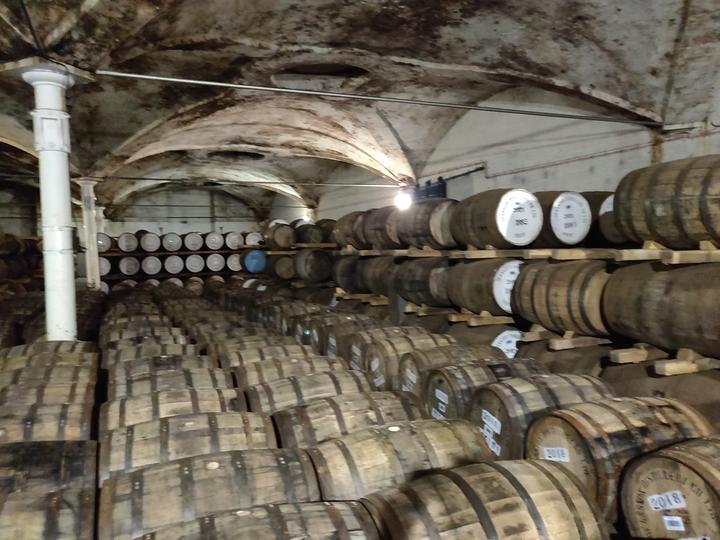
What is the Angels' share?
Published 22/07/2020
The Angels’ share is the romantic term for the annual rate of whisky lost during cask maturation due to evaporation. As the liquid would evaporate into the heavens, it was dubbed the angels’ share. From a scientific point of view, however, it is the volume of the liquid that turns into gas and then leaves the barrel. The amount lost in Scotland amounts to only 1-2%, in contrast with considerably warmer climates such as India or Australia where evaporation can reach as high as 12%. Regardless even in Scotland that adds up quickly.
What is the Angels' share?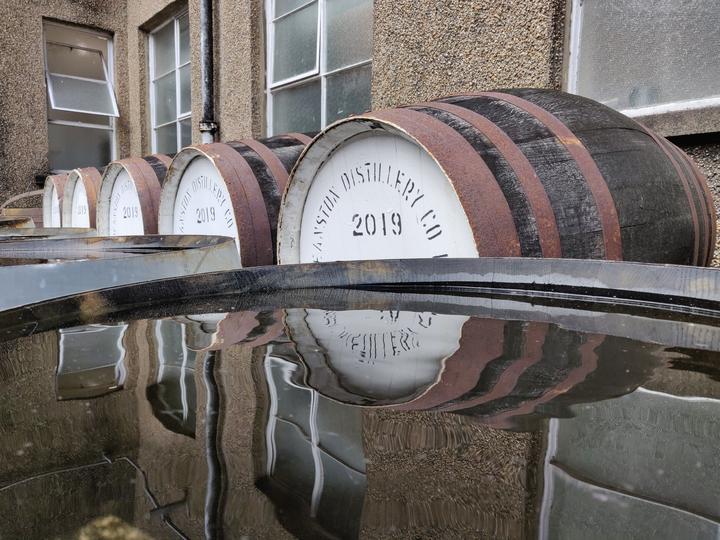
Whisky and Water
Published 22/07/2020
An interesting question and common debate on the topic of whisky is water. If you dilute your whisky with a few drops of water, you are not revealing yourself as a bar bully, but as a real expert. The water ensures that a flavor-imparting substance remains on the surface of the drink and thus conveys the smoky character of the whisky to the taste receptors of the drinker. Swedish researchers Björn Karlsson and Ran Friedman from the Linnaeus University Center for Biomaterials Chemistry report this in the scientific journal Scientific Reports.
Whisky and Water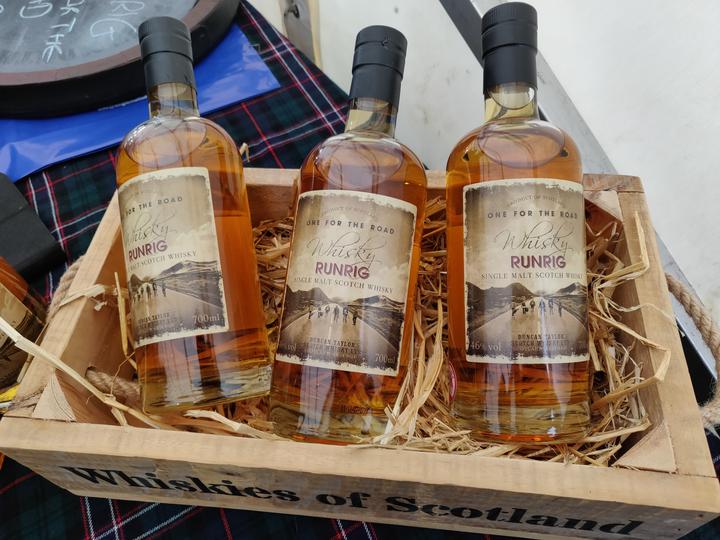
Why is Whisky Filled at 40% ABV?
Published 22/07/2020
The minimum ABV, like that of the minimum 3 year maturation was introduced as the result of political wrangling between the distilleries and the prohibitionists of the early 20th century. Despite this distilleries today will often attribute this towards quality control. Most Scottish whiskies are bottled with 40% ABV. This was not always the case: at the beginning of the 20th century, the alcohol content of whisky was usually between 44.6% and 48.6%, i.e. significantly higher. These somewhat crooked numbers resulted from the fact that the British gave the values in proof and thus in their own unit of measurement.
Why is Whisky Filled at 40% ABV?Grain Whisky
Published 17/07/2020
Grain whisky is the most common kind of whisky produced and yet the least heralded. Single malt may capture the imagination but 90% of all scotch whisky sales globaly are blends of single malt with grain whiskies. What is a Grain Whisky? A grain whisky is any whisky not made using 100% malted barley on a pot still. While a grain whisky is generally taken to be any whisky made without malted barley this is incorrect. There numerous examples of whiskies made only using malted barley which cannot legally be classified as single malts. Tehnically barley is a grain, and thus all whiskies are made using grain however a grain whisky is a legal/technical classification rather than a straight description.
Types of Scotch Whisky
Published 14/07/2020
Scotch whisky like all whisky is made using either malted barley, grain or a combination of the two. Despite this naming conventions historically have often been confused, sometimes intentionally with spirit labeled as pure malt, vatted malt, single malt etc. What whisky types of Scotch are there? Scotch is either bottled as single malt, blended malt, single grain, or blended Scotch. Single Malt Scotch Whisky A Scotch Whisky distilled at a single distillery (i) from water and malted barley without the addition of any other cereals, and (ii) by batch distillation in pot stills.

What are Lost Distilleries?
Published 14/07/2020
Lost distilleries are those distilleries closed due to either economic factors, under political pressure or, on rarer occasion due to indurmountable technical problems such as water shortages. Over the past century, over half of all malt whiskey distilleries in Scotland have been either closed or completely demolished. The removal of a railway, change in shipping routes, and other consequences of globalization are responsible for the end of many distilleries. This often happens when distilleries are bought up by large spirits companies. Diageo alone closed 16 distilleries alone, 11 along in 1983.
What are Lost Distilleries?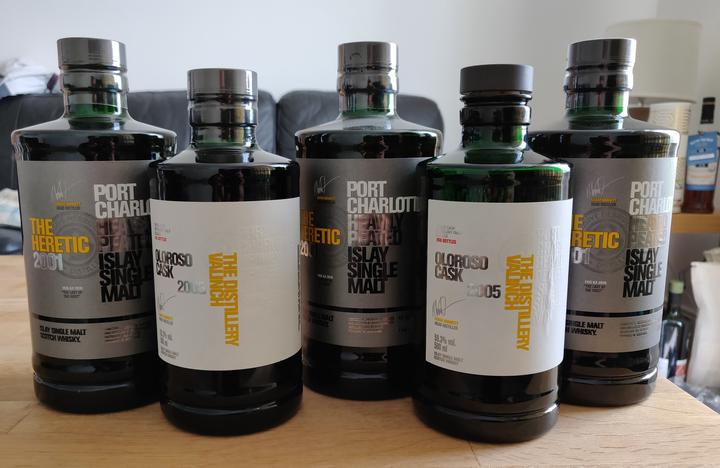
Distilleries, Lost Distilleries and Brands
Published 22/05/2020
The line between a brand and a distillery, and the linkages between distilleries of the same name can be somewhat complex. This is thanks to the turbulent history of whisky, Irish and Scotch Whisky in particular, closures, bankrupt businesses, discontinued brands, recreation of brands, regeneration of distilleries and other forms of necromancy and marketing. Deciding where to draw this line is actually more complex than we might think. Lost Distilleries and Distillery Resurrection Sometimes a closed distillery such as Brora or Port Ellen is recreated on the site of the former distillery. For simplicity when this happens in recent history these distilleries are treated as being re-opened rather than rebuilt as this is undoubtedly how these will be marketed. In truth the new site may have few if any buildings in common with the earlier site to say nothing of the equipment. It’s this peculiarity of marketing that allows a distillery built in 1957 to claim to be Scotlands oldest thanks to some bricks in common.
Distilleries, Lost Distilleries and Brands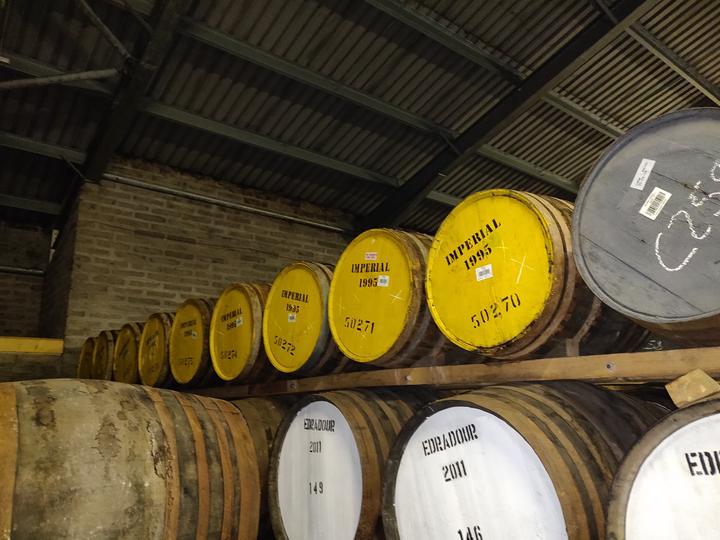
The Science of Whisky Maturation
Published 22/05/2020
There are over 100 whisky distilleries in Scotland and yet the New Make spirit is unique and its chemical composition differs from distillery to distillery. This colorless distillate already contains some of the compounds contained in the final aroma of the matured whisky, such as long-chain alcohols, phenols, esters, lactones, aldehydes, fusel oils, compounds containing sulfur and nitrogen. But the really interesting things happen in the wooden barrel, in which the whisky gets its unique and round taste. During barrel maturation one tries to find the balance between the spirit character and the maturation character.
The Science of Whisky Maturation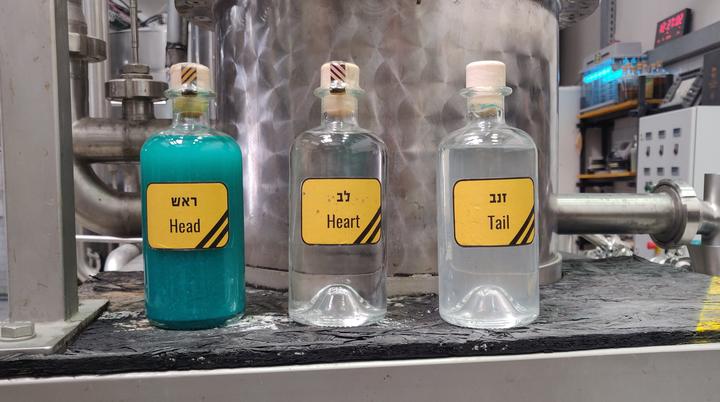
What is a Coffey still?
Published 22/05/2020
What is continuous distillation? Continuous distillation refers to the process by which a mixture of liquid, typically alcohol and water, is fractionally separated or split via the application of heat. Unlike conventional batch distillation which requires the manual removal of unwanted liquids before further distillation can occur, continuous distillation allows for a looping system meaning that distillation can continue with little to no interruption. This approach has a number of benefits over batch distillation.
What is a Coffey still?Whisky by Aeneas MacDonald
Published 22/05/2020
Aeneas MacDonald was the pseudonym of George Malcolm Thomson (1899 - 1996), then an Edinburgh-based writer and journalist. He adopted the non de plume in deference to his mother, who was a strict teetotaller! (The original Aeneas MacDonald was one of Bonnie Prince Charlie’s earliest supporters, the so-called ‘Men of Moidart’, who acted as banker to the Jacobite troops during the 1745 Jacobite Rising. Thomson himself was an ardent Scottish nationalist though ironically he subsequently spent most of his life in London.)