

Whisky Fundamentals
How did distillation come about?
Published 22/07/2020
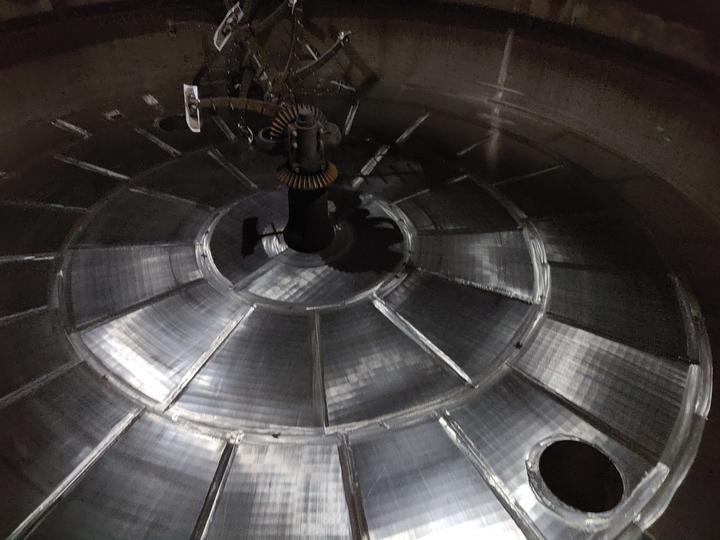
William Faulkner said that civilization begins with distillation. Taking stock of the progress of a civilization through the prism of its scientific and cultural advances in distillation is commendable. Distillation requires knowledge in many fields - agriculture, chemistry, biology, metallurgy, technology - as well as know-how in terms of conditioning, packaging and logistics. The above are the technical measures, but the cultural and sensory criteria require an audience with experienced taste buds and purchasing power to acquire the finished product and recognize its qualities.
How did distillation come about?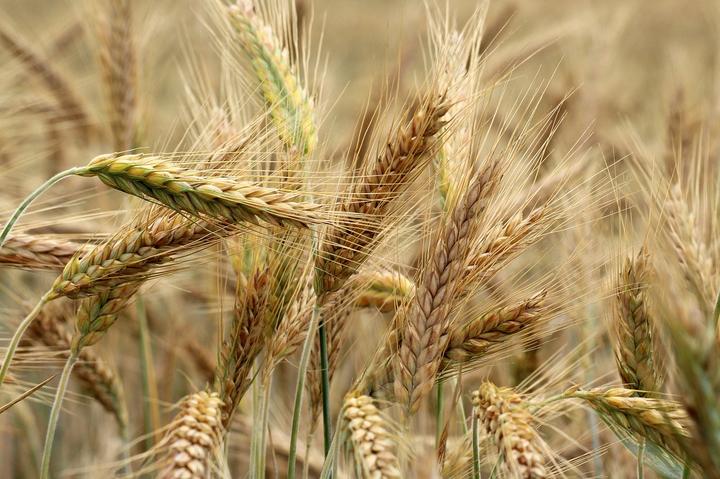
Is whisky gluten free?
Published 22/07/2020
Yes. Only the most allergic risk any issue as the distillation process, particularly of grain whiskies removes most of the protien. All products that contain less than 20 ppm (parts per million) of the protein are considered gluten-free. This whisky can be said to be gluten-free. Those with celiac disease cannot tolerate most grain products and should avoid them. Scotch whisky is also made from grain. In the case of single malts, malted barley comes into the stills, with blends it is a mixture of different types of grain. Nevertheless, whisky is gluten-free and can also be enjoyed if you are intolerant to gluten. As mentioned above, various cereals containing gluten are used to produce whisky. This does not matter because of the way it is made, as the gluten is no longer in the finished spirit.
Is whisky gluten free?
Mashing
Published 22/07/2020
What is Mashing? Mashing refers to the process by which the sugar within ground barley is extracted during the whisky production process, the process is identical for the production of beer and traditional malt vinegar. For mashing, the barley malted beforehand is ground (grist) and poured into the mash tun several times with water getting hotter and hotter. The required sugar solution (wort) is extracted. Traditionally, the sugar is washed out of the grain with three successive infusions, though a handful of distilleries such as Bunnahhain use four. The quality of the water used, and the substances within it are incredibly important, too many minerals, such as copper or iron, can cause problems during the subsequent fermentation process.
Mashing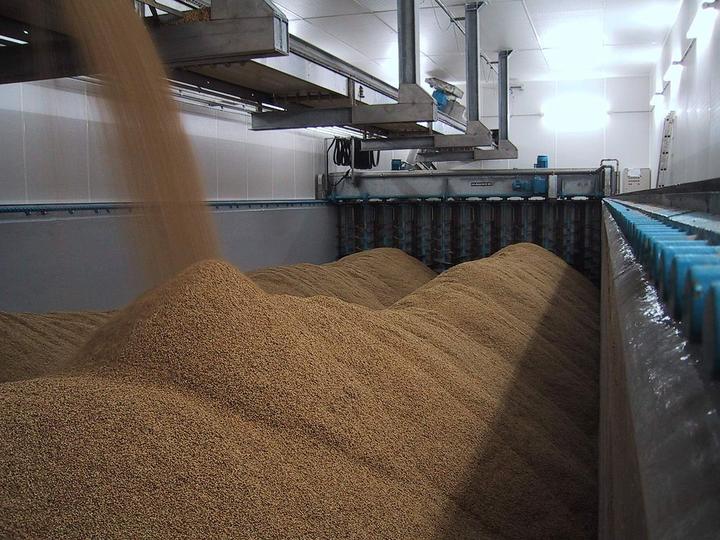
Saladin box
Published 22/07/2020
What is a Saladin Box? Saladin Malting were an early replacement for distillery floor malting for brewing and whisky making. There were two common versions: Saladin boxes and Round Saladin. Saladin boxes are horizontal boxes equipped with a spinner that move through the bed several times a day, increasing the barley thus preventing the roots from getting tangled. As the name suggests, Circular Saladin circular vessels are attached to an arm that rotates around the container. Both versions also allow air to be blown through the barley for cooling. The germinated ‘green malt’ is then transferred from the Saladin Box to the oven. Saladin boxes can be processed in batches of 200 tons bed of barley at a time between 60 cm and 80 cm deep and became obsolete when drum malting was introduced. The Glen Ord Saladin box was disposed in 1983 today there are only drum maltings. Nowadays most distilleries rely upon industrial maltings rather than producing their own malt.
Saladin box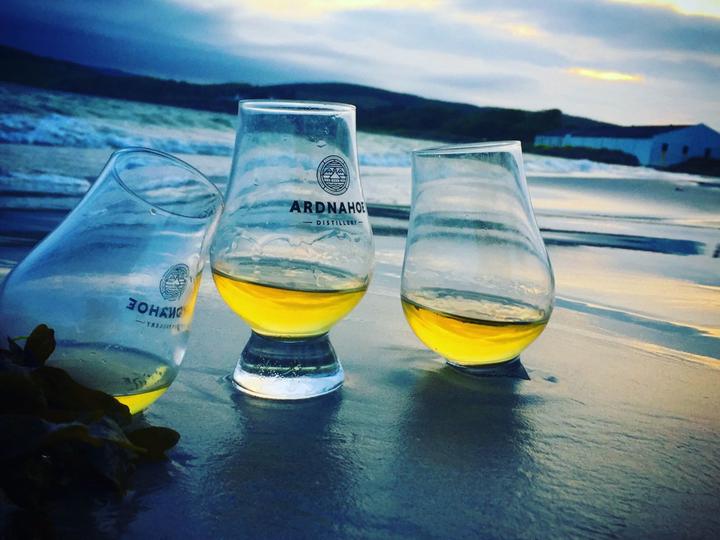
The Glencairn Whisky Glass
Published 22/07/2020
The Glencairn nosing glass is an iconic standard for the enjoyment of high-quality single malts: the Glencairn glass is indispensable for tastings around the world. Connoisseurs appreciate his qualities in nosing and tasting as well as the stable processing. We present you the Glencairn Nosing Glass in detail today - is it always the first choice? You can’t see it in the timeless Glencairn glass, but the design only dates from the 1970s: the short-stemmed Nosing glass was designed by designer Raymond Davidson. He wanted to develop a glass for whisky connoisseurs that optimally brings out the multi-layered aromas of high-quality single malts when nosing and tasting.
The Glencairn Whisky Glass
What Are Cask Strength Whiskies?
Published 22/07/2020
A Cask Strength Whisky is one not diluted with water to drinking strength when bottled. Typically this a stronger whisky with over 55% ABV though can in practice be far lower. This distinguishes strong bottling from regular versions, which often have an alcohol content of between 40 and 46% and are diluted with water when bottled. Alcohol is an excellent flavor carrier and so Cask Strength Whiskys are considered the fuller, more intense, complex bottlings. Some connoisseurs consider a whisky at cask strength to be a more honest representation of the distillerybeing bottle directly from the cask. Nevertheless, several single malt casks are often married together at Cask Strength, so they should not be confused with single cask bottlings (single cask whiskies). Strictly speaking, while cask strength has nothing to do with the absence of chill-filtration or the addition of e150A, these criteria can generally be taken as given. ‘Cask strength, Non-chill-filtered, & Natural colour’ is the standard label.
What Are Cask Strength Whiskies?What does a master blender do?
Published 22/07/2020
Master Blenders ensure that every bottle of a whisky bottling has the same taste for years and has the typical character of the distillery. But how does a master blender manage this feat and what are the special characteristics of it? contents What are the tasks of a master blender? It is the master blender that keeps an overview of the numerous whisky barrels in the warehouses. In addition to the actual blending of whiskies, a master blender is responsible for monitoring and developing the maturing whiskies. This also includes regularly checking the whisky barrels on a random basis. Among other things, he has to decide whether a whisky is already ready for bottling or whether it will benefit from longer storage or whether it should even be transferred to another whisky barrel for a finish.
What does a master distiller do?
Published 22/07/2020
A Master Distiller was and is a master of the field of distillation, who has acquired his skills and knowledge over many years. Personal experience down to the last detail was even more important in the past, as there were far fewer technical monitoring options for distillation than there are today. While the profession of master distiller was originally defined relatively clearly, today it is much more diverse. Originally, a master distiller was solely responsible for the consistent quality of the spirit produced. He monitored the raw materials used, the production process in pot stills or column stills and the consistently high quality of the unmatured distillate.
What is a Valinch?
Published 22/07/2020
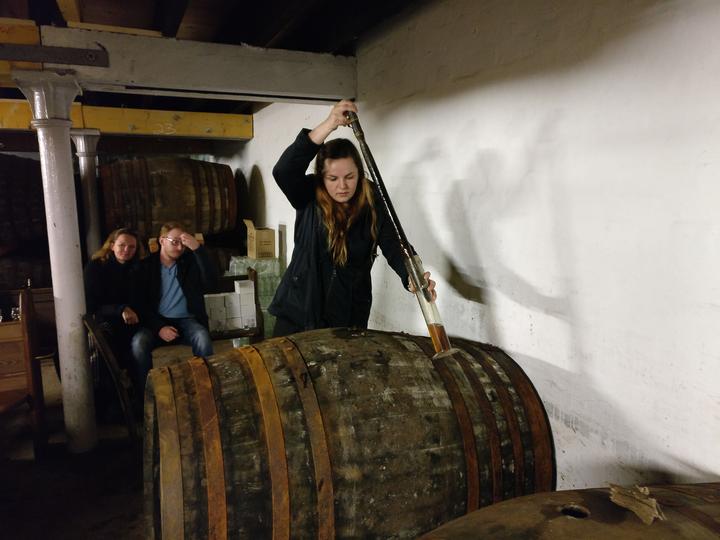
A valinch is usually used when tasting whisky directly in the warehouse. This device, which looks like a tool, is usually the only way to try the whisky straight from the barrel. But how does the Valinch work and how do you use it? A Valinch is a relatively long pipe, typically made of copper, which is used to extract small amounts of whisky from a cask . The valinch must even be quite long so that whisky can also be removed from barrels with a low level (due to the evaporation caused by the Angels’ Share). So that the whisky barrels can be checked regularly by the Master Blender , each barrel has a so-called bunghole. The bunghole is only closed with a wooden cork and can be removed relatively easily. The name Valinch is derived from the French word ‘avaler’ (swallow).
What is a Valinch?
What is an ex-bourbon barrel?
Published 22/07/2020
Ex-bourbon barrels are whisky casks which have been previously used to mature American Bourbon. These casks are prized within the scotch whisky industry and often used until exhaustion. If you enjoy Scottish single malts, you can hardly avoid American Bourbon Whiskey. Because what many do not know: Around 95% of all Scottish single malts mature in ex-bourbon barrels sourced from the USA. We present this type of barrel with its peculiarities and reveal why Scottish distilleries swear by American barrels.
What is an ex-bourbon barrel?